

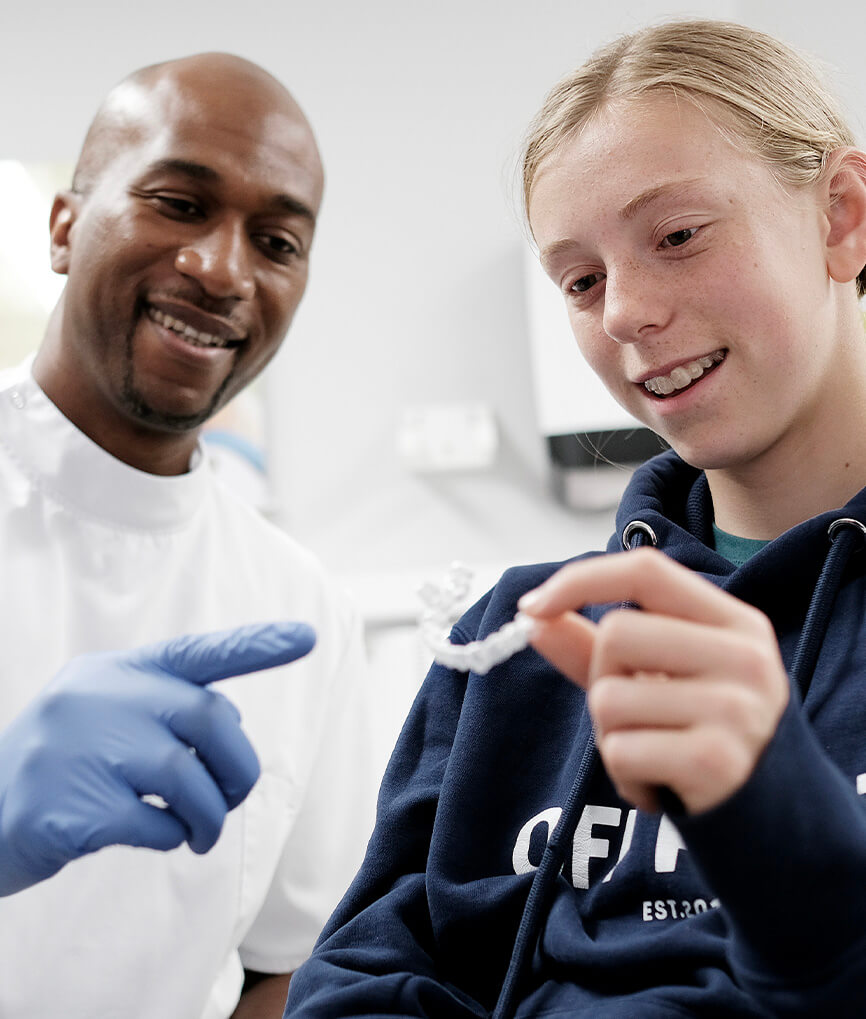
A Guide to Straightening Your Teeth
Crooked, crowded, or misaligned teeth are common concerns for adults and teenagers alike. While traditional braces remain an effective solution, many patients now look for more discreet orthodontic options that fit around busy lifestyles. This is where Invisalign has become an increasingly popular choice.
This educational guide explains how Invisalign works, who it may be suitable for, and what patients can expect when choosing Invisalign in West Sussex. Understanding the treatment process and benefits can help individuals decide whether clear aligners are the right option for achieving a straighter, healthier smile.
What Is Invisalign?
Invisalign is an orthodontic treatment that uses a series of custom-made, clear aligners to gradually move teeth into a more aligned position. Unlike fixed braces, Invisalign aligners are removable and designed to fit comfortably over the teeth. Each set of aligners is worn for a short period before being replaced with the next set in the series. Over time, this controlled movement may help improve alignment, spacing, and bite issues.
Many dental practices offering Invisalign in West Sussex use advanced digital planning to map out tooth movements from the initial consultation through to the final result.
Why Invisalign Has Become So Popular
Invisalign is often chosen by patients who want a more discreet alternative to traditional braces.
Some of the key reasons for its popularity include:
- Clear aligners that are less noticeable
- Removable design for eating and cleaning
- No metal brackets or wires
- Customised treatment planning
- Fewer in-practice adjustments compared to fixed braces
While Invisalign may not be suitable for every orthodontic case, it can be an effective option for many mild to moderate alignment concerns.
Common Dental Issues Invisalign May Help Address
Invisalign in West Sussex is commonly used to help manage a range of orthodontic concerns, including:
Crowded Teeth
Crowding occurs when there is insufficient space for teeth to sit correctly. Aligners may help create better spacing and alignment over time.
Gaps Between Teeth
Gaps can develop naturally or due to missing teeth. The treatment may help close spaces, improving both appearance and function.
Overbite, Underbite, and Crossbite
Certain bite issues may be improved using Invisalign, depending on their severity. Correcting bite alignment may also help reduce uneven tooth wear.
Relapse After Previous Braces
Some patients experience tooth movement years after traditional orthodontic treatment. The treatment may help realign teeth that have shifted. A consultation with a dental practice in West Sussex is essential to determine suitability.
The Invisalign Treatment Process
Understanding the treatment journey can help patients feel more confident when considering the treatment.
Initial Consultation
The first step is a detailed orthodontic assessment. This may include:
- Oral health examination
- Digital scans or impressions
- Discussion of alignment concerns and goals
- Review of treatment suitability
A personalised treatment plan is then created, showing the predicted movement of teeth throughout the Invisalign process.
Custom Aligner Creation
Using advanced technology, a series of custom aligners is produced. Each aligner is designed to apply gentle pressure to specific teeth, guiding them into position over time. Patients are usually advised to wear aligners for 20–22 hours per day for best results.
Progress Reviews
Regular check-ups allow the dental team to monitor progress and make any necessary adjustments. These appointments are typically less frequent than those required with traditional braces.
Dental practices offering Invisalign in West Sussex aim to ensure treatment remains on track and comfortable.
Completion and Retention
Once treatment is complete, retainers are usually recommended to help maintain the new tooth positions. Wearing retainers as advised may help prevent relapse.
Benefits of Choosing Invisalign in West Sussex
Selecting a local provider for Invisalign treatment offers several advantages.
Convenience and Accessibility
Choosing aligners in West Sussex allows patients to attend appointments close to home or work, making ongoing care more manageable.
Integrated Dental Care
Many patients value receiving orthodontic treatment within a full-service dental practice. This allows oral health, hygiene, and cosmetic needs to be managed alongside orthodontic care.
Support Throughout Treatment
Local dental practices provide face-to-face support, progress monitoring, and advice tailored to individual needs.
Invisalign vs Traditional Braces
Both aligners and traditional braces aim to straighten teeth, but they differ in approach.
Invisalign:
- Clear, removable aligners
- Discreet appearance
- Easier oral hygiene
- Requires patient compliance
Traditional Braces:
- Fixed brackets and wires
- Suitable for complex cases
- No need to remove appliances
A dental practice in West Sussex can advise on which option is most appropriate based on clinical assessment.
Maintaining Oral Health During Invisalign Treatment
Good oral hygiene is essential throughout orthodontic treatment. Invisalign’s removable design allows patients to:
- Brush and floss normally
- Clean aligners regularly
- Avoid food restrictions associated with fixed braces
Maintaining oral health may help reduce the risk of tooth decay and gum problems during treatment.
FAQs About Invisalign in West Sussex
1. How long does Invisalign treatment usually take?
Treatment time varies depending on individual needs, but many cases take between 6 and 18 months.
2. Is the treatment suitable for adults?
Yes, adults commonly choose Invisalign when they want discreet orthodontic treatment.
3. Does the treatment hurt?
Some mild discomfort may occur when switching to a new aligner, but this usually settles quickly.
4. How often must aligners be worn?
You should typically wear aligners for 20–22 hours per day to achieve effective results.
5. Can Invisalign fix complex alignment issues?
Invisalign can address many concerns, but severe cases may require alternative orthodontic treatments.
6. Are check-ups required during treatment?
Yes, regular reviews help ensure treatment progresses as planned.
7. What happens after the treatment ends?
Dentists usually recommend retainers to help maintain tooth alignment.
8. Is Invisalign removable for special occasions?
Yes, aligners can be removed briefly, but consistent wear is important.
Final Thoughts
Aligners offer a discreet and flexible way to straighten teeth while fitting into everyday life. With careful planning, regular monitoring, and good compliance, many patients achieve improved alignment and confidence. For those considering Invisalign in West Sussex, arranging a consultation with a local dental practice can provide clarity on suitability, treatment timelines, and expected outcomes.